


PLC Splitter
Your Leading PLC Splitter Supplier
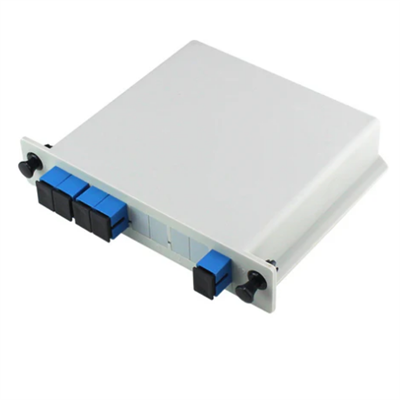
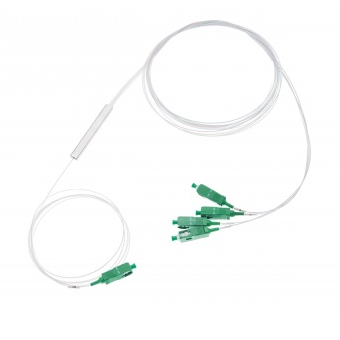
Ningbo Qimante Communication Technology Co., Ltd. is a Chinese fiber optic communication equipment manufacturer with 5 years of production experience. The company has complete production supporting equipment and several technical personnel. Our PLC splitter is divided into PLC plug-in splitter and PLC differential splitter. PLC splitters offer low insertion loss, high uniformity, and low polarization dependent loss, making them suitable for various applications.




Why Choose Us?
Professional Team
Since its establishment in 2019, the company has a professional technical research and development team, as well as professional management and product testing personnel.
Advanced Equipment
The company currently has production equipment such as injection molding machines, automatic nut planting machines, sheet metal laser cutting machines, bending machines, automatic welding machines, PLC alignment machines, fiber optic testers, fiber optic grinders, etc.
Broad Market
The company's products are mainly exported to Southeast Asia, Europe, America, South America, the Middle East, Central Asia, Africa and other countries worldwide.
Specifications of PLC Splitter
|
Configuration type: |
1*8 |
|
PLC Splitter type: |
Blockless PLC Plug-in Splitter |
|
Connector type: |
SC/UPC |
|
Operating bandwidth: |
1260~1650nm |
|
Typical insertion loss: |
≤ dB: 10.2 |
|
Insertion loss: |
≤dB: 10.7 |
|
Loss uniformity: |
≤dB: 0.4 |
|
Polarization dependent loss: |
≤dB: 0.2 |
|
Wavelength dependent loss: |
≤dB: 0.3 |
|
Return loss: |
≥dB: 50 |
|
Temperature dependent loss: |
≤dB: 0.5 |

● Low insertion loss;
● High uniformity across the entire spectrum 1260 - 1650 nm;
● Wavelength-independent optical parameters;
● Wide range of connector interfaces;
● Available in PM fiber version;
● Available in high-performance version.
Installation Steps of PLC Plug-in Splitter
Test fit the module in the place where you would like to install it. The module can be installed in any orientation that works for your project. Be sure to allow for 2-3 inches of room in front of the fiber connectors to allow technician access to the fiber connectors, the fiber, connectors, fiber boot and proper fiber bend radius.
Use the PLC plug-in splitter mounting brackets to secure the module in place. Based on where you are installing the module you could use industrial strength adhesive tape, hook and loop straps or even zip ties.
Once the module is in place make sure that the module is secure by trying to move the module by hand. Remember any tension applied to fibers connected to this module will create torque on the module and its mounting. If the module moves more than a few mm using moderate pressure with your hand you will want to resecure or tighten the straps.
Once the module is tested and installed its time to begin making connections per your engineered specification. The first connection is typically going to be made to the "IN" port. This will need a SC/APC connector and be spliced/connected to the OSP fiber facing towards the OLT (Central Office or Headend).
To make the connection for the "IN" port remove the dust cap and use a stick fiber cleaner to clean inside the port. Once this is done remove the dust cap from the SC/APC fiber jumper connector, clean with a fiber male end swipe cleaner and connect to the port labeled "IN" on the PLC plug-in splitter. Ensure that the connector is seated all the way in, and you hear an audible click when fully seated.
Once the "IN" port is connected you can continue making connections to the ports labeled 1:N following the procedure in step 5 above. For proper, reliable, and long-term performance of your network make sure to clean each fiber mating surface as you go.
Applications of PLC Splitter
Data Center
PLC fiber splitters are frequently used in data center networks to distribute fast data to numerous servers and storage devices. This makes it possible for data centers to efficiently handle high volumes of data traffic, resulting in quick and seamless data transfer.
Optical Access Networks
PLC fiber splitters are frequently used in optical access networks to provide high-speed internet connectivity to a number of clients. They provide end users with high-speed and dependable connectivity and are perfect for FTTH (Fiber to the Home) and FTTB (Fiber to the Building) applications.


Passive Optical Networks (PONs)
PLC splitters are a crucial component of passive optical networks (PONs), which are optical networks that link numerous consumers to a single optical fiber. Each customer has a unique dedicated connection thanks to the PLC splitter's separation of the optical signal into various pathways.
Medical Equipment
To distribute the optical signals from various cameras to a single monitor, PLC fiber splitters are also used in medical equipment such as endoscopes. Because of this, medical experts can view photos from different perspectives and get a better understanding of the internal structure of the patient's body.
Packing & Delivery

FAQ