

Fiber optic jumpers can be repaired by fusion splicing when they break. However, whether fusion splicing is necessary and the specific method of fusion splicing need to be comprehensively considered based on factors such as the type of fiber optic jumper, fracture situation, usage environment, and repair cost.
Types and fusion splicing of fiber optic jumpers
Fiber optic jumpers are usually divided into two types: single-mode and multi-mode. For single-mode fiber jumpers, if the fiber is damaged and causes breakage, generally only end face wear treatment, fusion repair, or replacement of the entire fiber jumper can be carried out. For multimode fiber jumpers, if the length of the fracture is short, direct fusion splicing can be attempted; If the length is long or in a linked state, replacement may be necessary.
Conditions and steps for welding
Condition:
The broken part of the fiber optic jumper should be flat, without obvious bending, twisting or damage.
Welding equipment should be professional and have good performance, ensuring welding quality and stability.
Welding operators should possess professional skills and experience, and be able to proficiently master the welding steps and precautions.
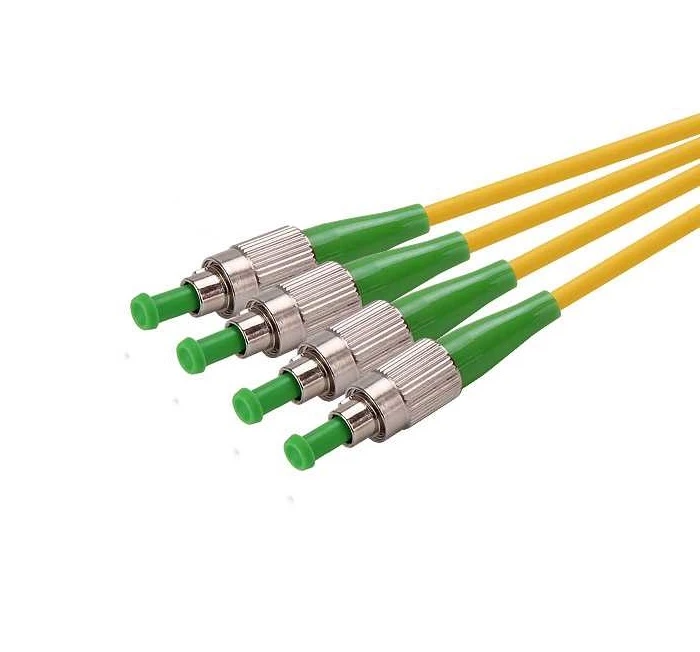
Steps:
Peel off the outer sheath and coating of the optical fiber to expose the bare fiber portion.
Clean the surface of bare fibers to remove impurities such as grease and dust.
Cut the bare fiber end face to make it flat, smooth, and free of burrs.
Place the two optical fibers to be fused into the V-shaped groove of the fusion splicer and secure their positions.
Set welding parameters, such as pre melting main melting current, time, and fiber feeding amount.
Start the welding machine for welding and observe the loss value and quality during the welding process.
After successful fusion, use heat shrink tubing to protect and fix the fusion point.
Precautions for Welding
During the fusion process, it is necessary to ensure that the axis of the optical fiber is aligned to avoid problems such as axis misalignment or tilt.
The fusion point should be flat, smooth, and free from obvious bubbles, thinness, coarseness, or virtual melting.
After the welding is completed, the welding point should be protected and fixed to avoid external damage or environmental impact.
During the entire fusion process, monitoring tools such as OTDR should be used to monitor and evaluate the loss and quality of the optical fiber in real time.
Other repair methods
In addition to fusion repair, other methods such as fiber optic quick connectors can also be considered for repair. These methods usually have the advantages of easy operation and low cost, but in some cases, they may not achieve the effect and stability of fusion repair.
In summary, fiber optic jumpers can be repaired by fusion splicing when they break. However, in the specific implementation of fusion repair, comprehensive consideration and decision-making need to be made based on factors such as the type of fiber optic jumper, fracture situation, usage environment, and repair cost. At the same time, strict adherence to operating standards and safety requirements should be followed during the welding process to ensure welding quality and personnel safety.


